Equipment & Accessories
The relationship between an athlete and their equipment extends far beyond simple ownership. Whether you’re a weekend warrior or a dedicated amateur competitor, the gear you choose, maintain, and eventually replace directly influences your performance, safety, and financial investment. Yet the sports equipment landscape has become increasingly complex, with marketing claims promising revolutionary improvements, technical specifications that seem indecipherable, and price points spanning orders of magnitude for seemingly similar products.
Making informed decisions about sports equipment requires understanding several interconnected domains: the actual value proposition of different gear tiers, the critical safety considerations that dictate replacement schedules, the biomechanical principles that determine proper fit, the maintenance practices that extend useful life, and the emerging role of performance data in equipment optimization. This comprehensive resource connects these essential concepts to help you navigate equipment decisions with confidence, avoiding costly mistakes while maximizing both safety and performance outcomes.
Understanding Equipment Value and Investment Decisions
The sports equipment market deliberately creates confusion around value, with manufacturers positioning products across dramatic price ranges while obscuring the actual performance differences. For athletes seeking to optimize their investment, understanding where money creates genuine advantage versus diminishing returns becomes essential.
High-End vs. Entry-Level Gear
The performance gap between equipment tiers exists, but it’s rarely linear with price. Entry-level equipment typically delivers 70-80% of the performance of professional-grade gear at 30-40% of the cost. The remaining performance margin matters tremendously for elite competitors where hundredths of seconds determine outcomes, but represents minimal practical difference for recreational athletes whose limiting factor remains fitness and technique rather than equipment specifications.
Consider cycling as a concrete example: a mid-tier carbon frame might weigh 200 grams more than a top-tier model costing three times as much. For a 75-kilogram rider, this represents a 0.26% weight difference—imperceptible in real-world conditions for anyone not competing at elite levels. The marketing narrative emphasizes the absolute difference while obscuring the relative insignificance for most users.
Resale Value and Upgrade Timing
Strategic equipment planning considers the total ownership cost rather than merely the purchase price. Equipment resale value follows predictable depreciation curves that vary significantly by category:
- Durable goods (bikes, kayaks, skis) typically retain 60-70% of value after one season if well-maintained
- Technical electronics (GPS watches, power meters) depreciate 40-50% annually as newer models emerge
- Soft goods (shoes, apparel) have minimal resale value regardless of condition
- Safety equipment (helmets, harnesses) becomes essentially worthless after expiration dates, even if unused
This understanding reveals that mid-tier equipment often represents the optimal value proposition for progressive athletes. Purchasing quality gear that performs well, maintaining it properly, and selling it before significant depreciation occurs creates an upgrade path with remarkably low net cost—often less than repeatedly purchasing budget equipment that cannot be resold.
Spotting Marketing Hype
Equipment marketing employs specific linguistic patterns to suggest revolutionary improvements that rarely materialize in controlled testing. Phrases like “up to X% improvement” always reference ideal laboratory conditions that never occur in actual use. “Professional choice” claims ignore that professionals receive free equipment and often use products primarily for sponsorship obligations rather than performance superiority.
The most reliable indicator of genuine innovation is specificity. Vague claims about “enhanced performance” or “advanced technology” without measurable, testable parameters almost always indicate marketing rather than substantive improvement. Conversely, specific claims—”reduces joint impact force by 12% compared to previous model as measured by force plate analysis”—can be verified and suggest actual engineering advancement.
Safety Considerations and Equipment Lifespan
Unlike performance equipment where marginal differences rarely matter for recreational athletes, safety gear tolerates no compromise. Understanding replacement criteria, material degradation patterns, and certification standards becomes literally vital for activities involving impact risk or environmental exposure.
When to Replace Safety-Critical Gear
Safety equipment fails through two distinct mechanisms: catastrophic damage from single impacts and gradual degradation from age and repeated stress. Both require replacement, but recreational athletes frequently miss the second category, continuing to use gear that appears cosmetically intact while its protective capacity has substantially diminished.
Helmets illustrate this clearly. Any impact sufficient to cause visible damage or jar your head obviously necessitates replacement, even if no cracks are apparent—the energy-absorbing foam compresses permanently and cannot protect during subsequent impacts. Less obviously, helmet foam degrades chemically over time even without use. Most manufacturers specify replacement after 3-5 years regardless of impact history, yet studies consistently show athletes using helmets well beyond this window, often because “it still looks fine.”
Climbing equipment, harnesses, ropes, and protective padding all follow similar principles. Establish replacement schedules based on both age and usage intensity, documenting purchase dates and retiring gear proactively rather than reactively.
Material Degradation and Certification Standards
Different materials degrade through different mechanisms at different rates. Synthetic materials like nylon and polyester degrade primarily through UV exposure and chemical contamination, while foams degrade through oxidation and temperature cycling. Understanding these patterns helps you assess whether gear stored properly might exceed manufacturer recommendations, or conversely, whether gear used in harsh conditions might require earlier replacement.
Certification standards (CE, ASTM, CPSC, and sport-specific organizations) provide minimum safety thresholds, but not all certifications are equivalent. European CE standards often employ more rigorous testing protocols than some regional alternatives. When selecting safety equipment, verify that certification testing actually addresses your specific use case—a helmet certified for cycling may not provide adequate protection for skiing, despite appearing similar.
The Hidden Risks of Second-Hand Equipment
Purchasing used equipment offers compelling financial advantages for non-safety items, but introduces significant risks for protective gear. You cannot reliably determine impact history, storage conditions, or age verification for used safety equipment. A helmet involved in an impact that didn’t crack may appear pristine while offering negligible protection. A climbing harness stored in a hot vehicle for multiple summers may have severely degraded materials despite minimal visible wear.
The financial savings of used safety gear rarely justify the risk. Reserve second-hand purchases for non-safety items where performance degradation is obvious (worn bearings, damaged surfaces) rather than hidden structural compromise.
Proper Fit and Biomechanical Adaptation
Equipment that doesn’t match your individual biomechanics transforms from performance asset to injury liability. The difference between properly fitted and improperly fitted gear often exceeds the performance gap between budget and premium equipment, yet athletes routinely obsess over specifications while ignoring fit fundamentals.
Why Individual Body Mechanics Matter
Human bodies exhibit remarkable variability in proportions, flexibility, strength imbalances, and movement patterns. Equipment designed for “average” dimensions and “normal” biomechanics fits almost nobody optimally. Small misalignments compound over thousands of repetitions, creating stress concentrations that manifest as chronic injuries.
Think of biomechanical fit like shoe sizing. Everyone understands that wearing shoes two sizes too small causes immediate pain and injury, yet many athletes tolerate equivalent biomechanical mismatches in other equipment simply because the discomfort develops gradually rather than immediately. A saddle height error of just 5 millimeters can alter knee flexion angle sufficiently to cause patellar tracking issues over subsequent rides, even though the difference is imperceptible initially.
Footwear Selection for Injury Prevention
Athletic footwear represents perhaps the most critical equipment decision for most athletes, yet selection is frequently driven by aesthetics, brand loyalty, or price rather than biomechanical compatibility. Proper footwear selection requires understanding several key factors:
- Assess your strike pattern and arch structure through wear pattern analysis on current shoes or professional gait analysis
- Match cushioning and support to your weight and impact forces—heavier athletes and heel-strikers require more substantial cushioning
- Select terrain-specific features including tread pattern, plate stiffness, and water resistance based on actual use conditions
- Size for activity-specific swelling—feet expand during exercise, requiring 10-15mm of toe space beyond your largest toe
- Establish rotation schedules to prevent repetitive stress from identical motion patterns
Running shoes specifically should be replaced every 400-600 kilometers regardless of appearance, as midsole cushioning degrades substantially while uppers remain cosmetically intact. Tracking mileage and retiring shoes proactively prevents the gradual transition from adequate to inadequate cushioning that leads to impact injuries.
Professional Fitting vs. DIY Adjustments
The decision between professional fitting services and self-adjustment depends on equipment complexity, injury history, and performance goals. For relatively simple equipment with obvious adjustment feedback (seat height where knee extension feels immediately wrong), careful DIY adjustment using established methodologies often suffices. For complex equipment with subtle interactions between multiple adjustment points (bike fit involving saddle position, handlebar reach, cleat alignment), professional fitting typically justifies the cost.
Professional fitters provide value through several mechanisms: specialized measurement tools that quantify positions more precisely than home methods, experience recognizing compensatory patterns that mask underlying issues, and systematic adjustment protocols that isolate variables. However, fitting is not one-time—as fitness improves, flexibility changes, or equipment ages, periodic reassessment becomes necessary. Developing basic adjustment literacy allows you to maintain fit between professional sessions.
Maintenance Strategies for Longevity
Proper maintenance extends equipment lifespan, preserves performance characteristics, and prevents premature replacement costs. Yet maintenance routines often receive minimal attention until obvious failure occurs, missing the opportunity to prevent degradation rather than reacting to it.
Technical Fabric Care
Modern athletic fabrics incorporate sophisticated treatments for moisture management, water resistance, and antimicrobial properties. These treatments degrade rapidly when exposed to harsh detergents, excessive heat, or fabric softeners. Technical fabric lifespan depends more on washing methodology than use frequency.
Effective technical fabric care follows specific protocols:
- Use sport-specific detergents formulated without optical brighteners or fabric softeners that clog fiber structures
- Wash in cold water on gentle cycles to minimize mechanical stress and heat degradation
- Air dry whenever possible; if machine drying is necessary, use low heat settings
- Periodically restore DWR (durable water repellent) coatings on waterproof items using spray-on or wash-in treatments
- Store clean and completely dry to prevent mildew and material degradation
Many athletes unknowingly destroy expensive technical garments by treating them identically to cotton cl
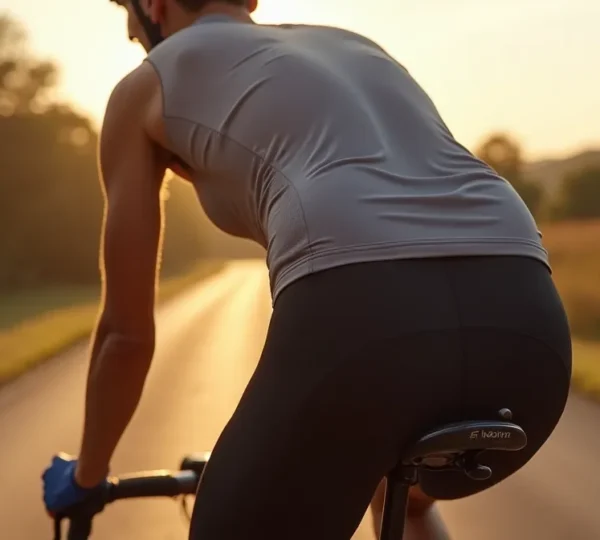
Bike Fit Ergonomics: Why Your Lower Back Hurts After 20 Miles?
Contrary to popular belief, lower back pain from cycling is not a sign of weakness but a signal of a biomechanical system failure. Incorrect component setup (saddle, stem) forces your body into compensatory patterns that overload lumbar muscles. Off-bike habits,…
Read more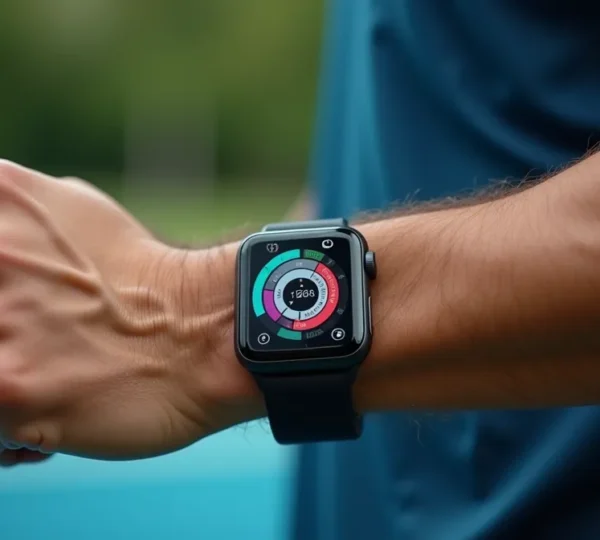
Smart Watch Metrics: Which Data Points Actually Improve Performance?
The greatest performance gains come not from collecting more data, but from systematically ignoring most of it. Your watch’s raw numbers (like daily HRV or a single sleep score) are often meaningless “noise.” The real value lies in contextual trends…
Read more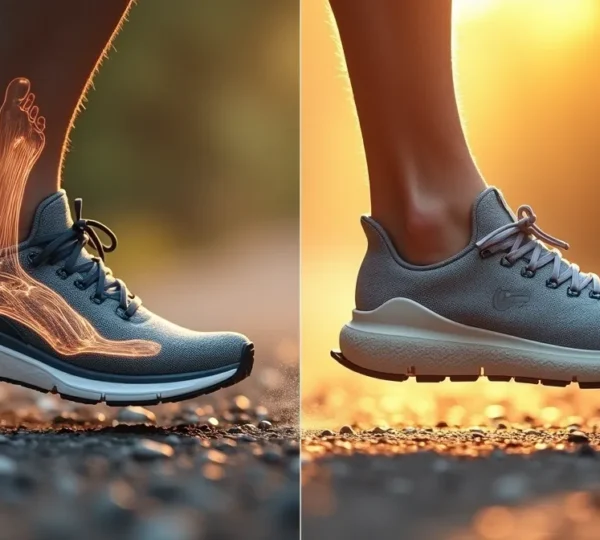
Zero Drop vs. Maximalist Cushioning: Which Shoe Architecture Prevents Knee Pain?
The debate between zero-drop and maximalist shoes misses the point: knee pain is primarily a load management issue, not a cushioning one. Maximalist foam can inadvertently increase impact forces and destabilize your gait by dulling proprioceptive feedback. Zero-drop shoes demand…
Read more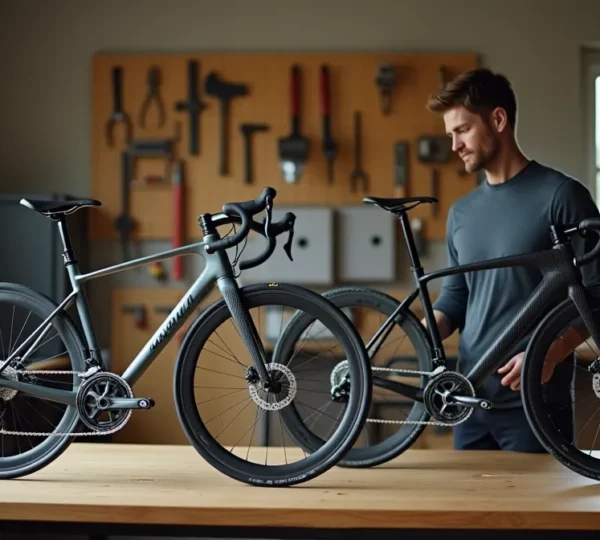
Entry-Level vs. Pro Gear: Where Should Amateurs Spend Their Budget?
The common wisdom to “buy the best you can afford” is flawed financial advice for hobbyist athletes. The most expensive gear offers diminishing performance returns that are irrelevant for non-professionals. True value lies in maximizing your “Return on Experience” (comfort,…
Read more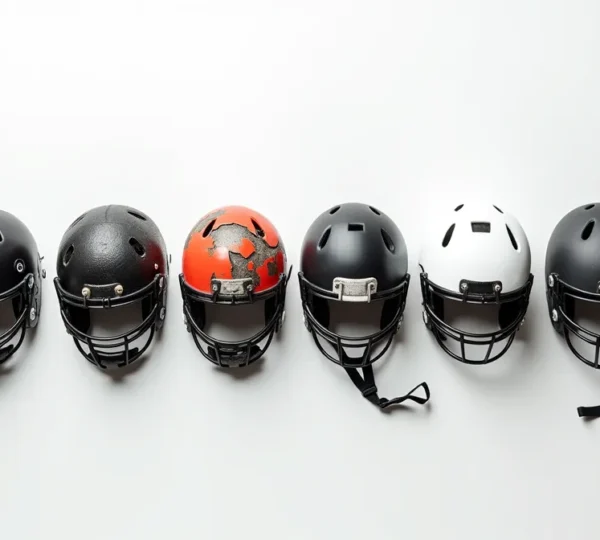
Visible Impact Is the Wrong Metric: When to Truly Replace Your Safety Gear
A piece of safety gear that appears undamaged can be structurally compromised and useless; visual inspection alone is a dangerous and unreliable method of assessment. Protective materials undergo silent degradation from environmental factors like UV light, even when stored. The…
Read more
Cheap vs. Technical Gear: Which One Actually Saves You Money Over 3 Years?
The initial price of sports equipment is misleading; true value is revealed by its Total Cost of Ownership (TCO) over time. Cheap gear often has a higher cost-per-use due to rapid performance decay and shorter functional lifespan. Technical gear, while…
Read more