For the restless mind, true quiet isn’t found by trying to empty the brain, but by overloading it. This article explains the neuroscience behind why high-speed, high-consequence activities are a more effective shortcut to mental peace than traditional meditation, by forcing a physiological shutdown of your brain’s overthinking centers.
If you have a mind prone to anxiety or ADHD, you’ve likely been told to meditate. You’ve probably tried to sit still, focus on your breath, and “just be.” And for many, the result is not serene silence but a louder, more frantic internal monologue. This frustration is common because traditional meditation asks a racing mind to do the one thing it can’t: voluntarily slow down. The constant battle to suppress thoughts often creates more mental noise, leaving you feeling like a failure at finding peace.
The conventional wisdom about achieving mental clarity is built on a foundation of stillness and gentle focus. But what if this approach is fundamentally mismatched for your neurotype? What if the real key to silencing the chatter isn’t to empty your mind, but to flood it? This is the core principle of achieving flow state through high-focus activity. For a brain that won’t shut up, you don’t need less stimulation; you need a very specific, all-consuming *type* of stimulation that leaves no room for anything else.
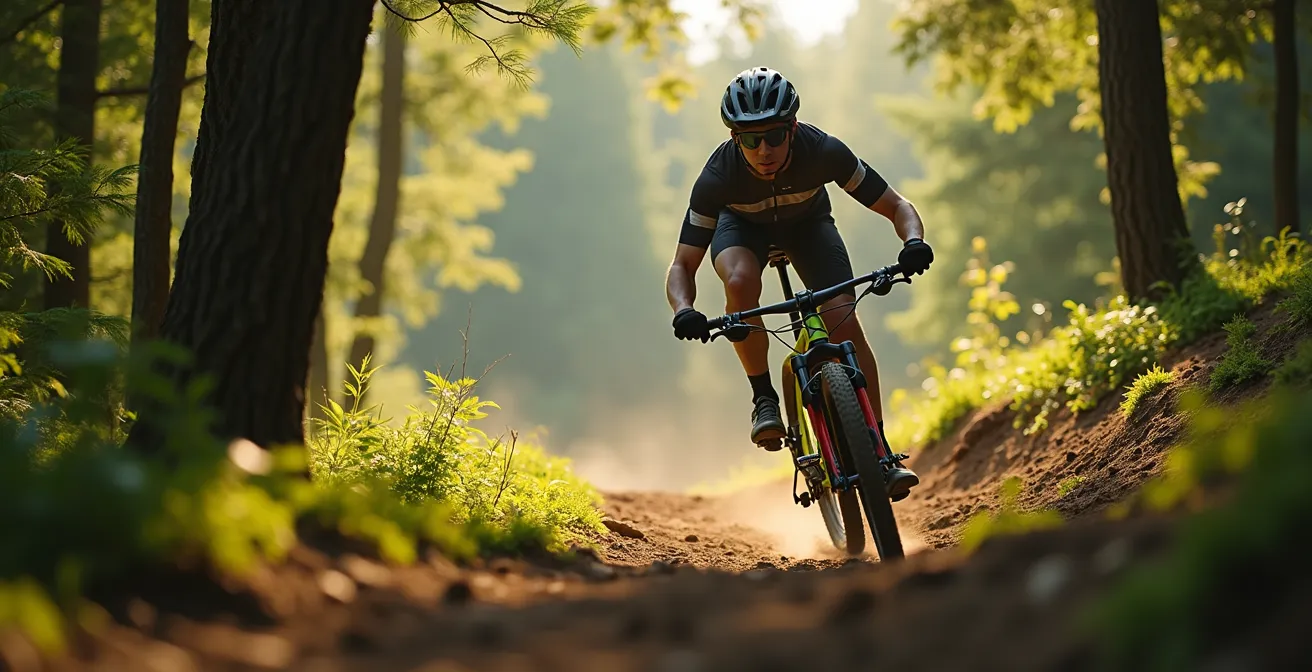
This article explores the counter-intuitive yet scientifically-backed reason why high-speed sports like downhill biking or rock climbing can be a more effective form of meditation for anxious minds. We will deconstruct the neurochemical shortcut that forces a state of “active calm”—a state where you are hyper-alert yet internally silent. Forget trying to quiet the storm; you’re about to learn how to outrun it.
To fully grasp this powerful alternative to traditional mindfulness, this guide breaks down the science and practical application into distinct, actionable parts. Explore the sections below to understand the mechanisms of flow and how to harness them for your own mental well-being.
Summary: The Flow State: Why High-Speed Sports Quiet the Mind Better Than Sitting Still?
- Why Shutting Down the Prefrontal Cortex Creates Inner Peace?
- How to Balance Challenge and Skill to Enter the Zone?
- Meditation vs. Downhill Biking: Which Clears the Mind Faster?
- The Focus of Consequence: Why Risk Forces Presence?
- The Afterglow: How to Integrate Flow Insights into Daily Life?
- Tactical Breathing: How to Lower Your Heart Rate in 3 Seconds Mid-Fight?
- Why 45 Minutes of Focus Trumps 90 Minutes of Distracted Training?
- Why Prioritizing Active Pleasure Boosts Mental Health in High-Stress Jobs?
Why Shutting Down the Prefrontal Cortex Creates Inner Peace?
The constant buzz of anxiety, self-doubt, and what-if scenarios originates primarily from one place: the prefrontal cortex (PFC). This is your brain’s CEO, responsible for complex planning, self-analysis, and abstract thought. While essential for navigating modern life, it’s also the source of rumination and worry. For those with ADHD or anxiety, the PFC is often in overdrive. The secret to the profound peace found in flow state lies in temporarily taking this CEO offline—a phenomenon known as transient hypofrontality.
During a high-focus, high-consequence activity, your brain is so consumed with processing immediate sensory data and executing complex motor skills that it doesn’t have the bandwidth to power the PFC. It’s a forced neurological shortcut. Your brain must choose between calculating the trajectory of a jump on a mountain bike and worrying about an email you sent yesterday. It will always choose survival. As a result, your inner critic, your long-term worries, and your sense of self-awareness simply dissolve. This isn’t a voluntary act of “letting go”; it’s a physiological inevitability.
As InnerDrive’s research team explains, this shutdown is what allows for peak performance:
During flow, this area of the brain goes quiet and is less active. This allows other parts of your brain, responsible for skill execution and focus, to function better.
– InnerDrive Research Team, InnerDrive Blog on Flow in Sports
The result is a state of “active calm.” You’re not zoned out; you are intensely zoned *in*. Your actions feel automatic and effortless because the part of your brain that would normally second-guess them is silent. This is confirmed by fMRI studies, which show extensive deactivation of the prefrontal cortex during flow states, while sensorimotor areas get a significant boost. It’s the neurological equivalent of closing all the background apps on a computer to let the main program run at full speed.
Case Study: The Improvising Brain of Jazz Pianists
To witness this phenomenon in action, researchers Limb and Braun studied the brain activity of jazz pianists during improvisation. Using fMRI scans, they found that as the musicians entered a creative flow, their brains showed a significant shutdown of the dorsolateral prefrontal cortex—the area associated with self-monitoring and inhibition. Simultaneously, activity surged in sensorimotor areas responsible for playing the instrument. The musicians weren’t consciously deciding which note to play next; they were in a state where the music flowed through them, uninhibited by self-critique. This provides powerful evidence that shutting down the “inner critic” is a key ingredient of the flow state, whether you’re on a stage or a mountainside.
How to Balance Challenge and Skill to Enter the Zone?
The gateway to flow state is not simply choosing a difficult activity; it is finding the precise, razor-thin edge where the challenge you face is a perfect match for your current skill level. This is the challenge-skill balance, the single most important condition for triggering transient hypofrontality. If the task is too easy, your mind has spare capacity, and it will wander. Boredom sets in, and the prefrontal cortex fires right back up. If the task is too hard, you’re overwhelmed. This triggers anxiety and frustration, which also activates the PFC, leading to a spiral of self-criticism.
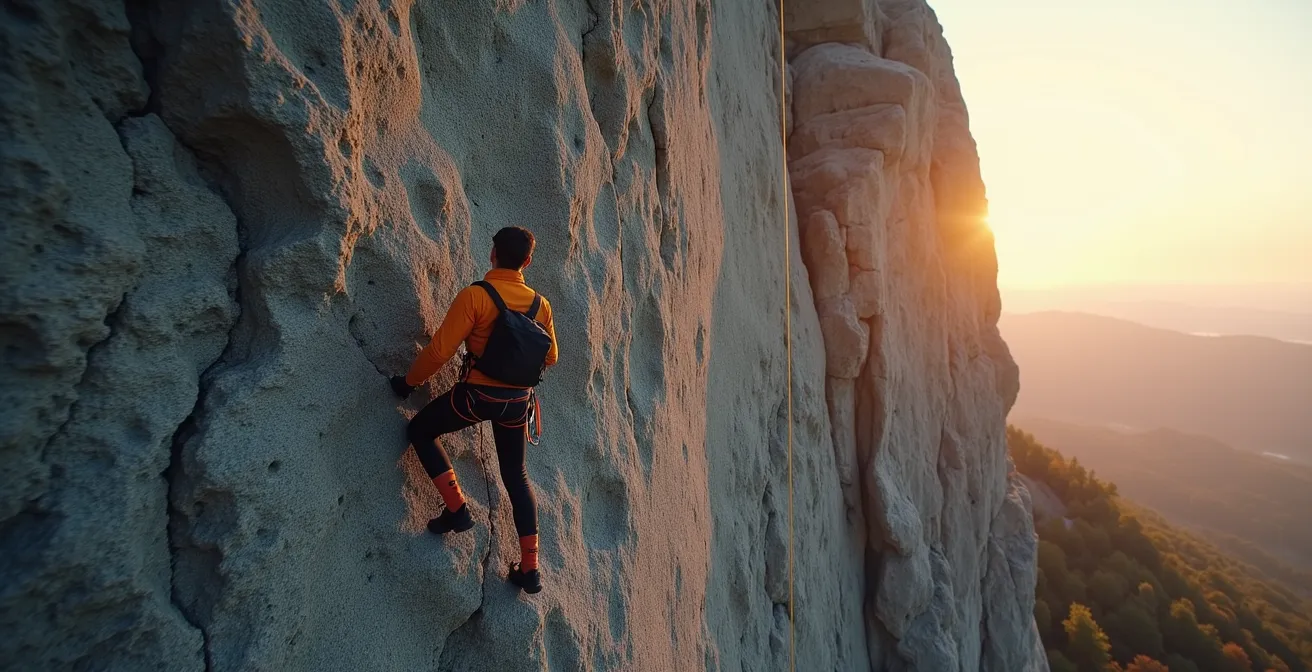
The “flow channel” exists in that delicate sweet spot where the activity demands your absolute, undivided attention. It must be difficult enough that you cannot succeed on autopilot, forcing you to stretch your abilities, but not so difficult that you feel hopeless. For a rock climber, it’s not the easy warm-up route or the impossible overhang; it’s the wall that requires every ounce of their strength and problem-solving ability to conquer. Each move is a puzzle that consumes all cognitive resources, leaving none for worry.
This balance is dynamic. As your skills improve, the bar for the challenge must be raised to continue finding flow. What was a flow-inducing activity last month may be boring today. This requires conscious effort to constantly push your boundaries—a principle known as progressive overload in physical training. To consistently find this state, you must become a student of your own abilities, always seeking a task that is approximately 4% harder than your current skill level. This specific percentage is often cited as the optimal gap to trigger focused attention without inducing overwhelming anxiety.
For someone with ADHD or anxiety, this principle is liberating. Instead of fighting for focus in a low-stimulation environment, you are creating an environment where intense focus is the only option. You’re not forcing your mind to be quiet; you’re giving it a problem so compelling that it has no choice but to become quiet on its own.
Meditation vs. Downhill Biking: Which Clears the Mind Faster?
On the surface, a monk sitting in silent meditation and a mountain biker hurtling down a trail might seem to be pursuing opposite goals. Yet both often report a similar outcome: a sense of profound presence and mental quiet. The critical difference, especially for a restless mind, lies in the neurochemical path taken to get there. Meditation cultivates an inhibitory calm, while high-speed sports generate an excitatory calm. They are two fundamentally different ways of silencing the mind.
Meditation is a top-down process. It involves voluntarily reducing prefrontal cortex activity through disciplined practice, primarily leveraging neurotransmitters like GABA and serotonin to create a state of relaxed awareness. It’s a skill built gradually over time. For a mind that is already overstimulated and resistant to voluntary quieting, this can feel like trying to stop a freight train by leaning against it. High-speed sports, in contrast, are a bottom-up process. They work by overwhelming the PFC with so much sensory input and immediate physical demand that it is forced to shut down. This state is driven by a potent cocktail of norepinephrine, dopamine, and endorphins—the same neurochemicals involved in the fight-or-flight response.
This explains the paradox of feeling intensely alive and focused, yet simultaneously peaceful and free from worry. As one expert puts it, the chemical profile of performance flow is far from relaxed. It is a state of high arousal, harnessed and directed. The following table breaks down the fundamental differences between these two paths to mental clarity.
| Aspect | High-Speed Sports | Meditation |
|---|---|---|
| Primary Neurotransmitters | Norepinephrine, Dopamine, Endorphins | GABA, Serotonin |
| Type of Calm | Excitatory calm (active quiet) | Inhibitory calm (passive quiet) |
| Prefrontal Activity | Forced shutdown via overload | Voluntary reduction through practice |
| Time to Effect | Immediate during activity | Gradual over sessions |
| Brain Wave Pattern | Alpha/Theta during flow | Alpha/Theta after practice |
This comparison, detailed in an analysis of the neuroscience of flow states, reveals why activities like downhill biking can clear the mind faster for certain individuals. It doesn’t require the learned skill of voluntary thought suppression. It provides a powerful, immediate, and physiological lever to achieve the same mental silence that meditation promises, making it a superior tool for anyone who finds sitting still an impossible task.
The Focus of Consequence: Why Risk Forces Presence?
Why do activities with a genuine element of risk—like skiing a steep couloir, surfing a big wave, or climbing without a rope—have such a potent ability to induce flow? The answer lies in the focus of consequence. When a mistake could lead to serious injury, the brain’s survival mechanisms kick into high gear. This is not a gentle invitation to be present; it is a biological mandate. Your brain is hardwired to prioritize immediate threats over abstract worries, and risk is the most powerful trigger for this attentional shift.
Risk forces your brain to operate in the here and now. The possibility of a fall, a crash, or a misstep instantly silences the part of your mind that ruminates about the past or anxieties about the future. All of your cognitive resources are marshaled to deal with the immediate task at hand. This intense focus is not something you have to “try” to achieve; it is an automatic, non-negotiable response to the environment. This is why many people with ADHD find solace in extreme sports: the external environment provides the intense attentional anchor that their internal systems struggle to create.

This isn’t just a feeling; it’s a measurable performance enhancer. The heightened focus, accelerated learning, and creativity that accompany flow are dramatically amplified by risk. Research into this area is compelling, with some studies on adventure sports indicating people can be up to 500% more productive in a flow state. Risk acts as a turbocharger for the flow triggers, demanding complete engagement and unlocking latent potential. It’s the ultimate hack for a distracted mind, creating a situation where being present is not a choice but a necessity for survival.
This doesn’t mean you need to become a death-defying daredevil. Risk is relative. For a novice skateboarder, simply learning to drop into a small ramp carries a level of consequence sufficient to command their full attention. The key is to engage in activities where mistakes have tangible, immediate feedback. The focus of consequence is about creating a closed loop where your action, the outcome, and the need for the next action are so tightly interwoven that there is no mental space for anything else.
The Afterglow: How to Integrate Flow Insights into Daily Life?
The intense, blissful quiet of a flow state is powerful, but its true value extends far beyond the activity itself. The period immediately following a flow experience is a unique neurochemical window of opportunity known as the “afterglow.” Your brain is still bathed in a cocktail of performance-enhancing and mood-boosting chemicals like dopamine, endorphins, and serotonin. This creates a state of heightened creativity, increased learning capacity, and elevated mood that can be strategically leveraged.
Failing to consciously integrate the lessons and feelings from flow is a missed opportunity. The insights gained—the feeling of effortless action, the absence of self-doubt—can fade quickly if not anchored into your daily life. The goal is to transfer the *qualities* of the flow state into your work, relationships, and general mindset. This process involves moving from unconsciously experiencing flow to consciously deconstructing and applying its principles. Did you make a complex decision intuitively? That was your brain operating without the PFC’s interference. Can you replicate that trust in other areas?
The lasting impact is significant. According to research highlighted by Harvard professor Teresa Amabile, people who experience flow report higher levels of productivity, creativity, and happiness for up to three days after the experience. This isn’t just a fleeting “high”; it’s a sustained cognitive and emotional enhancement. To capture these benefits, you need a structured process for reflection and integration.
The following checklist provides a framework for capturing and applying the insights from your flow state, turning a momentary experience into a lasting tool for mental wellness and peak performance.
Your Action Plan: Post-Flow Integration
- Immediate Debrief: Within 10-15 minutes after the activity, spend a few moments journaling. Write down specific decisions that felt automatic or moments when your perception of time shifted. Don’t analyze, just document.
- Somatic Anchoring: While journaling, consciously recall and note your physical posture and sensations during a peak flow moment. This creates a “somatic anchor,” allowing you to tap into that physical memory later to recall the mental state.
- Leverage the Afterglow: Schedule a creative problem-solving session or tackle a complex cognitive task within the first 30-90 minutes post-flow. Use the heightened creativity and focus from the residual neurochemicals.
- Identify Heuristics: Review your journal later. What were the mental shortcuts or “rules of thumb” you used when you weren’t overthinking? Can these intuitive approaches be applied to a problem at work or in your personal life?
- Schedule the Next Session: The most crucial step is to put your next flow-inducing activity on the calendar. Consistency is what transforms this from a random occurrence into a reliable mental health practice.
Tactical Breathing: How to Lower Your Heart Rate in 3 Seconds Mid-Fight?
While high-speed sports are a powerful way to *force* a flow state, you can’t always drop into a half-pipe when anxiety strikes at your desk. However, you can borrow a crucial physiological lever from the flow state toolkit: breath control. Your breath is the most direct and rapid way to influence your autonomic nervous system, shifting you from a state of “fight-or-flight” (sympathetic) to “rest-and-digest” (parasympathetic). Learning a tactical breathing technique is like having a manual override for your body’s alarm system.
The technique often taught to elite soldiers and athletes is a form of “box breathing” or a combat breathing protocol designed for immediate state change. It works by stimulating the vagus nerve, a critical component of the parasympathetic nervous system that acts as a brake on your heart rate. The key is the extended exhale. A long, forceful exhale tricks your brain into believing the danger has passed, triggering a cascade of calming signals throughout your body. This is not about deep relaxation; it’s a precise, physiological intervention to regain control under pressure.
This technique can be used pre-performance to calm nerves, or even mid-activity during a brief pause to reset and refocus. For someone with anxiety, it is an invaluable tool to stop a panic response in its tracks. It provides an immediate, tangible action to take when your mind starts to spiral, anchoring you in the physical reality of your breath instead of the abstract world of worry. Mastering this can be done in minutes, and its effects are almost instantaneous.
The 3-Second Reset Protocol:
- Inhale (2 Counts): Take a deep, but quick, inhalation through your nose for a count of two. Fill your diaphragm first.
- Hold (1-2 Counts): Pause briefly at the top of the inhalation. This momentary hold prevents a panicked, shallow breathing cycle.
- Forceful Exhale (4 Counts): Exhale sharply and completely through your mouth for a count of four, as if you’re blowing out a candle with force. The exhale must be longer than the inhale.
- Pause (1-2 Counts): Hold the empty state for a brief moment before beginning the next cycle.
Repeating this cycle just three or four times can produce a measurable drop in heart rate and a noticeable reduction in the feeling of panic. It is a micro-dose of the physiological control experienced in a full flow state, accessible to you at any moment.
Why 45 Minutes of Focus Trumps 90 Minutes of Distracted Training?
The path to the challenge-skill balance required for flow is paved with a specific type of effort: deliberate practice. It’s the critical difference between spending time and investing time. Ninety minutes of going through the motions at the gym while scrolling on your phone between sets is less valuable than 45 minutes of pure, uninterrupted focus. The magic isn’t in the duration; it’s in the density of your attention.
When you are deeply focused on a task, your brain releases a key neurotransmitter called acetylcholine. As neuroscience research demonstrates, acetylcholine release during focused attention acts like a highlighter for your brain, marking specific neural circuits for strengthening. This process, known as synaptic plasticity, is the physical basis of learning. When you are distracted, acetylcholine is not released efficiently, and your brain doesn’t get the signal to “save” the new skill. You can practice for hours, but very little of it will stick. A short, intense burst of focus is neurologically superior to a long, diluted effort.
This concept of focused effort is the core of deliberate practice. It is not mindless repetition but a systematic process of skill acquisition.
It transcends mere repetition, targeting the improvement of specific skills through focused, goal-oriented activities and immediate feedback. By concentrating on technique and constantly pushing the boundaries of one’s abilities, deliberate practice paves the way for achieving expertise.
– The Geeky Leader, Deliberate Practice Explained
For someone with a mind prone to distraction, this is a game-changing insight. The goal isn’t to fight distraction for hours on end. It’s to create small, protected windows of intense focus. A 45-minute session with your phone in another room, a clear goal for what you want to improve, and a commitment to immediate feedback (e.g., reviewing a video of your form) will build skill—and thus, access to flow—exponentially faster than hours of “junk” training. This approach makes skill acquisition less daunting and more compatible with a brain that thrives on novelty and intensity.
Key Takeaways
- Overload, Don’t Empty: For anxious or ADHD minds, forcing a PFC shutdown through intense activity is often more effective than trying to voluntarily quiet it with meditation.
- The Challenge/Skill Sweet Spot: Flow is triggered when a task is perfectly matched to your ability, demanding full attention without causing overwhelming anxiety.
- Risk as a Focus Hack: Consequence-driven activities create a biological mandate for presence, making them a powerful tool for silencing mental chatter.
Why Prioritizing Active Pleasure Boosts Mental Health in High-Stress Jobs?
In the context of a high-stress career, it’s easy to view hobbies as a luxury or a form of passive escape. We collapse onto the couch for a Netflix binge, seeking to numb the mental fatigue. However, the neuroscience of flow suggests a far more effective strategy for long-term mental health: prioritizing active pleasure. This means deliberately engaging in activities that are challenging, require skill, and produce a state of flow, rather than simply consuming entertainment.
The difference lies in what happens in your brain. Passive consumption provides a short-lived dopamine hit but does little to build resilience. Active engagement in a flow-inducing sport, on the other hand, does more than just distract you. It actively counteracts the neurochemical damage of chronic stress. Intense physical activity that you enjoy stimulates the production of Brain-Derived Neurotrophic Factor (BDNF), a protein often described as “Miracle-Gro for the brain.” BDNF promotes the growth of new neurons and strengthens existing ones, particularly in areas like the hippocampus, which is vulnerable to the corrosive effects of chronic stress.
Furthermore, the cocktail of neurochemicals released during flow—dopamine, norepinephrine, endorphins, anandamide, and serotonin—acts as a potent, natural antidepressant and anxiolytic. You are not just escaping your stress; you are actively rewiring your brain to be more resilient to it. By regularly entering a flow state, you are building a robust psychological immune system. This makes the time spent rock climbing or trail running not an indulgence, but an essential act of mental hygiene, as critical as sleep or nutrition for someone in a demanding job.
This transforms the way we should view leisure. It’s not about finding the easiest way to relax. It’s about finding the most engaging way to recharge. It’s the difference between being a passive spectator of pleasure and an active creator of it. For those in high-pressure roles, dedicating time to an activity that provides this deep, restorative engagement is one of the most powerful investments you can make in your sustained performance and overall well-being.
To put these principles into practice, the next logical step is to identify an activity that matches your risk tolerance and begin the journey of deliberate practice to find your personal flow channel. Start today to transform your mental health from a battle against anxiety into a pursuit of active, joyful engagement.