
Contrary to popular belief, personal safety isn’t about learning to fight; it’s about mastering the mental discipline to avoid the fight entirely. True situational awareness is not about spotting external threats, but about managing your internal cognitive state. This guide focuses on recognizing the perceptual traps that lead to vulnerability and interpreting pre-attack indicators so you can de-escalate or evade danger long before it materializes, making physical defense a true last resort.
The advice given to any urban resident concerned about safety is often deceptively simple: “Be aware of your surroundings.” We’re told to put our phones away, to not wear headphones, and to “trust our gut.” While well-intentioned, this advice treats awareness as a passive switch to be flipped on or off. It fails to address the core reason why people find themselves in dangerous situations: not a lack of seeing, but a failure to understand. Most people who are attacked saw their aggressor coming; they just didn’t interpret the signals correctly due to cognitive biases and perceptual traps.
The common approach focuses on external threats, compiling lists of suspicious behaviors to watch for. But what if the real vulnerability lies within our own minds? The key to genuine safety is not in hyper-vigilance, which is exhausting and unsustainable, but in a proactive mental discipline. It’s about training your brain to establish a baseline of normalcy for any environment, so that any deviation—no matter how subtle—registers as a noteworthy event requiring a decision.
This article re-frames situational awareness as an internal skill. We will move beyond generic platitudes to explore the cognitive mechanics of threat recognition. We will dissect why we miss obvious cues, how to manage our alertness without succumbing to paranoia, and when de-escalation is a more successful strategy than physical engagement. The goal is to provide a pragmatic framework for navigating the urban landscape, one that empowers you to outmaneuver danger by understanding the human dynamics that precede violence.
This guide breaks down the essential components of proactive situational awareness. Explore the following sections to build a robust mental framework for personal safety.
Summary: Developing Proactive Threat Recognition
- Why Most Victims Miss the Pre-Attack Indicators Visible 10 Seconds Prior?
- The Cooper Color Code: How to Stay Alert Without Being Paranoid?
- De-escalation vs. Physical Engagement: Which Has a Higher Success Rate?
- The Tunnel Vision Mistake: Why You Back Yourself into Corners?
- Self-Defense Law: When Does ‘Standing Your Ground’ Become Assault?
- The Black Belt Illusion: Thinking a Belt Color Guarantees Safety
- The Focus of Consequence: Why Risk Forces Presence?
- Krav Maga vs. Jiu-Jitsu: Which Discipline Builds Faster Reflexes for Self-Defense?
Why Most Victims Miss the Pre-Attack Indicators Visible 10 Seconds Prior?
The most unsettling truth about violent encounters is that they are rarely a surprise. In the moments leading up to an assault, attackers almost always broadcast their intentions through a series of behavioral cues. The failure is not one of vision, but of interpretation. We see the signals, but our brain, conditioned by a powerful “normalcy bias,” dismisses them. This cognitive shortcut assumes that because nothing bad has happened before in a similar situation, nothing bad will happen now. It actively works to explain away anomalies to maintain a comfortable sense of order.
An attacker’s pre-fight tension manifests physically. These are not subtle twitches but clear physiological stress responses. Recognizing them requires a conscious effort to override the brain’s desire for normalcy and instead ask, “Why is this person’s behavior deviating from the established baseline?” The baseline is the collective mood and activity of the environment. A person acting aggressively in a library stands out more than one at a rowdy sports bar. The key is to first observe what’s normal, then scan for deviations.
Law Enforcement Analysis of Pre-Attack Indicators
Police training emphasizes recognizing involuntary physical tells. Clenching behaviors, such as tightening fists, gritting teeth, or a bulging jawline, are primary indicators of physical stress and a readiness for violence. As the body prepares for impact or assault, large muscle groups constrict; the trapezius muscles (connecting the neck and shoulders) often rise, and the facial muscles contract. These are autonomic responses to an adrenaline surge that an individual cannot easily conceal.
Key behavioral cues often hide in plain sight. An aggressor might engage in “target spotting” with quick, furtive glances, or “grooming behaviors” like repeatedly adjusting clothing where a weapon might be concealed. They may test your boundaries with innocuous questions about the time or a small favor, using it as an interview to gauge your awareness and confidence. These aren’t random actions; they are fragments of a tactical script. Learning to see them for what they are is the first step in preempting an attack.
The Cooper Color Code: How to Stay Alert Without Being Paranoid?
The command to “be alert” is fundamentally flawed because it’s unsustainable. Constant high alert, or hyper-vigilance, leads to mental exhaustion and anxiety, making you less effective at spotting real threats. The solution lies in managing your awareness level dynamically. Developed by Marine and firearms expert Jeff Cooper, the Cooper Color Code is a mental model designed to do exactly that. It’s not a set of rigid states, but a mental dimmer switch you adjust based on your environment.
As Jeff Cooper’s background illustrates, this system was born from a need for practical application in high-stakes environments. According to an analysis by Better Protectors, the group that documented the system, it was created to help soldiers and police manage their mindset, a tool that has since been adopted for personal security. The goal is to spend most of your time in “Condition Yellow.”
This paragraph introduces a complex concept. To better understand these mental states, the illustration below provides a visual metaphor for the transitions.
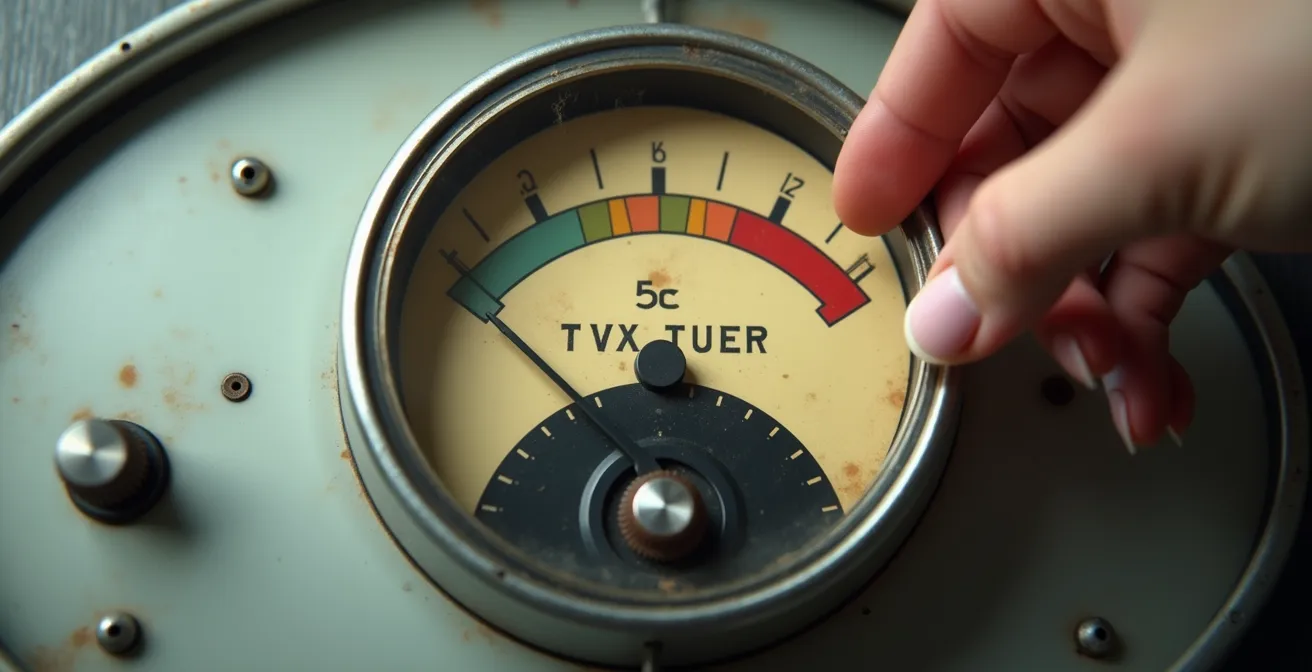
As the visual suggests, moving between these states should be a fluid adjustment. Condition Yellow is the ideal state for an urban resident. It is not a state of paranoia but one of “relaxed alert.” In Yellow, you are not looking for a specific threat; you are simply observing your surroundings and practicing a form of proactive de-selection, noting the baseline of activity and acknowledging who is around you. This state can be maintained indefinitely without fatigue. It’s the simple act of choosing a seat with your back to a wall in a café or noticing who gets on the subway car with you. Moving to Orange or Red only happens when a specific anomaly breaks that baseline.
The following table breaks down each level of awareness, outlining the mental state and its sustainability.
| Color Code | Mental State | Description | Sustainability |
|---|---|---|---|
| White | Unaware | Complete unawareness, unprepared for threats | Only safe when asleep |
| Yellow | Relaxed Alert | Aware of surroundings, no specific threat identified | Can maintain indefinitely |
| Orange | Specific Alert | Potential threat identified, planning response | Physically tiring, mentally draining |
| Red | Ready to Act | Direct threat, prepared to take action | Extremely exhausting |
De-escalation vs. Physical Engagement: Which Has a Higher Success Rate?
The most successful fight is the one that is never fought. Therefore, de-escalation almost always has a higher success rate than physical engagement, because it carries zero risk of physical injury or legal entanglement. However, this is only true if de-escalation is a conscious strategy, not a passive hope. The choice between the two depends entirely on your ability to correctly assess the aggressor’s intent and the immediate level of threat. Success hinges on creating and maintaining distance, which gives you time to think and react.
Distance is your most valuable asset. It is a non-negotiable element of personal safety. The goal of any initial interaction with a potential threat is to increase this buffer. This can be done physically by taking a step back while speaking or verbally with clear commands like “Stop, don’t come any closer.” This space is critical; as the well-known Tueller rule demonstrates, an attacker with a weapon can cover 21 feet in about 1.5 seconds—often less time than it takes to react. Managing this reactionary gap is not optional.
Effective de-escalation requires tactical empathy, not appeasement. You must understand the type of aggression you are facing. Is it ego-driven, where a person feels disrespected? In this case, providing a face-saving exit can defuse the situation. Is it instrumental, where the aggressor wants something you have (e.g., your wallet)? Here, strategic compliance is often the safest path. The key is to depersonalize the encounter. Insults or provocations are merely tools used to elicit a reaction from you. By not reacting emotionally, you retain control of your decision-making process and can choose the strategy with the highest probability of success.
The Tunnel Vision Mistake: Why You Back Yourself into Corners?
Under extreme stress, the human body undergoes a series of physiological changes known as the adrenal stress response. Your heart rate skyrockets, fine motor skills degrade, and your focus narrows dramatically. This is tunnel vision, a perceptual trap where your brain filters out all peripheral information to focus solely on the perceived threat. While useful for a purely physical confrontation, it’s disastrous for situational awareness. It causes you to lose track of other potential threats, escape routes, or weapons of opportunity.
Attackers often intuitively or deliberately exploit this phenomenon through “environmental funneling.” They will use their positioning to subtly guide you into a location where your movement is restricted—a corner, a narrow hallway, or between parked cars. You become so focused on the individual in front of you that you don’t realize you’ve been maneuvered into a tactical disadvantage until it’s too late. Breaking free from this trap requires conscious and trained effort to maintain peripheral awareness even when zeroed in on a threat.
This macro photograph of an eye shows reflections of the environment, symbolizing the peripheral awareness that is lost during tunnel vision.

Overcoming tunnel vision is not natural; it must be trained. The goal is to condition yourself to perform small, deliberate actions that force your brain to acknowledge the wider environment. This can be as simple as mentally naming the colors of objects in your periphery or consciously wiggling your toes to bring your focus back to your own body. High-stress scenario training is exceptionally effective, as it helps inoculate you against the initial shock of an adrenaline dump, allowing you to think more clearly and avoid the common mistake of backing yourself into a corner.
Action Plan: Breaking Tunnel Vision Under Stress
- Practice Micro-Actions: During moments of low-level stress, train yourself to perform a tiny, pre-planned action, like shifting your weight or taking a deep breath, to break a mental freeze.
- Scan in Sectors: Instead of letting your eyes lock onto a threat, practice a “360-degree security” scan by consciously checking your left, right, and rear fields of vision.
- Take Mental Snapshots: In a safe environment, practice taking rapid, wide-angle “mental snapshots” of your surroundings and then recalling specific details from your periphery.
- Identify the Funnel Early: Train yourself to recognize environmental pressure tactics. Notice when someone is using their position to limit your exit options, not just when you’re already in the corner.
- Engage in Stress Inoculation: Effective training involves realistic, high-stress scenarios that help your brain become accustomed to the adrenaline response, thereby reducing its paralyzing effects.
Self-Defense Law: When Does ‘Standing Your Ground’ Become Assault?
Winning the physical confrontation is only half the battle; you must also win the legal one that follows. The line between justifiable self-defense and assault is razor-thin and is not determined by your fear, but by a legal standard of “reasonableness.” Understanding this framework is a crucial component of situational awareness because it informs your decision-making under pressure. Any use of force must be justified by three pillars: Innocence (you were not the aggressor), Imminence (the threat of harm was happening right now), and Proportionality (your level of force was appropriate for the threat you faced).
The concept of a “pre-emptive strike” is one of the most legally perilous areas. It can only be justified if you can clearly demonstrate that you had a reasonable belief that grievous bodily harm was imminent. This is where your ability to spot and recall pre-attack indicators becomes a legal tool. Your defense begins the moment the incident ends. You must be prepared for the “Articulation Test”—the ability to explain to law enforcement precisely *why* you felt a specific level of force was necessary, based on the actions, words, and behaviors of the aggressor.
Understanding an attacker’s motivations can also play a role in assessing imminence. Threats are rarely completely random. As FBI research on pre-attack behaviors reveals that nearly 80% of active shooters had identifiable grievances that motivated their violence. While this doesn’t predict a specific attack, recognizing signs of a grievance-driven individual (e.g., someone vocalizing a perceived injustice) can elevate your awareness from Yellow to Orange, prompting you to create distance long before a threat becomes imminent.
The Black Belt Illusion: Thinking a Belt Color Guarantees Safety
One of the most dangerous perceptual traps in personal safety is the “black belt illusion”—the belief that martial arts proficiency automatically translates to real-world safety. While traditional martial arts build discipline, fitness, and technical skill, they often do so in a controlled, cooperative environment. This can inadvertently create dangerous habits that fail catastrophically in a chaotic street encounter.
Training with cooperative partners and predictable attacks can create false confidence and dangerous habits (‘scars’) that fail in chaotic, non-compliant street encounters.
– Self-Defense Training Analysis, Martial Arts Reality Training Principles
Real-world violence is messy, unpredictable, and does not follow rules. An attacker is not a sparring partner; they are non-compliant and will use surprise, overwhelming force, and environmental factors to their advantage. Training that focuses purely on technique without incorporating high-stress, scenario-based drills and, most importantly, awareness training, provides a false sense of security. The true measure of a self-defense system is not how well you can execute a move on a willing partner, but how quickly you can recognize a threat and avoid the confrontation altogether.
The practical application of awareness skills often proves far more valuable than complex physical techniques, as this real-world account demonstrates:
I had to use what I learned the next week in a real life situation. I was walking through a crowd one Halloween when I noticed unusual movement ahead… There was a drunk fool grabbing girls in inappropriate places. I was quickly able to divert his grabby hands because I noticed what was going on and could make a decision that would put me in the best case scenario.
– Real-World Application of Awareness Training
This experience perfectly illustrates the article’s core thesis: by noticing the anomaly (“unusual movement”) and correctly identifying the threat, the individual was able to act preemptively and avoid becoming a victim without throwing a single punch. Her safety was guaranteed by her awareness, not her belt color.
The Focus of Consequence: Why Risk Forces Presence?
What truly anchors situational awareness and prevents complacency is a sober understanding of consequence. It is easy to drift into Condition White—complete unawareness—when the perceived risk is low. However, when you mentally rehearse the genuine, life-altering consequences of a violent encounter, your brain is forced into a state of presence. This isn’t about fear-mongering; it’s about risk-driven focus. The “consequence” is not just “getting hurt.” It’s the potential for legal battles, financial ruin, long-term injury, and the emotional trauma inflicted upon you and your family.
Risk Homeostasis in Self-Defense Training
When you are in Condition Red—the “go mode” for executing a physical response—your body is flooded with an adrenaline cocktail that enables incredible feats under the flight-or-fight response. However, this state is extremely taxing and mirrors symptoms of post-traumatic stress if maintained. The concept of risk homeostasis suggests that as an individual’s skills increase, their tolerance for risk may also increase, leading them to take more chances. A deep focus on consequence counteracts this by constantly reminding the practitioner that the primary goal is always prevention, not performance.
A useful mental exercise is “consequence gaming.” When you enter a new environment, don’t just look for exits. Ask yourself, “What is the unacceptable outcome here?” and visualize it. If I’m attacked here, what is the realistic aftermath? This mental rehearsal connects your abstract awareness training to a tangible, high-stakes reality. This practice helps manage risk homeostasis—a psychological tendency to take more risks when you feel safer (e.g., after extensive training). By keeping the focus on the severe consequences of failure, you prioritize avoidance and de-escalation over a desire to “test” your skills.
Ultimately, a focus on consequence is what forces you to be present. It elevates situational awareness from a casual practice to a critical life-saving discipline. The earlier you are aware of a potential threat, the more options you have to respond, and the less likely you are to face the devastating consequences of physical violence. It transforms “what if” from a source of anxiety into a tool for strategic planning.
Key Takeaways
- Situational awareness is an internal mental skill focused on managing your cognitive state, not just an external scanning for threats.
- The primary goal of awareness is to create options—to de-escalate, evade, or create distance—making physical confrontation a true last resort.
- A clear understanding of the severe legal, medical, and emotional consequences of violence is what forces the mental presence required for effective awareness.
Krav Maga vs. Jiu-Jitsu: Which Discipline Builds Faster Reflexes for Self-Defense?
When choosing a martial art for self-defense, the question is not simply “which one is better?” but “which one better cultivates the attributes needed for real-world encounters?” While both Krav Maga and Brazilian Jiu-Jitsu (BJJ) are highly effective disciplines, they prioritize different aspects of self-defense, which in turn develops different types of reflexes and awareness. The choice depends on what scenarios you are most likely to face as an urban resident.
Krav Maga is a military self-defense system designed for brutal efficiency. Its core principle is to neutralize a threat as quickly as possible. Training often involves high-intensity “stress inoculation” drills, defense against multiple opponents, and the use of the environment. This methodology is explicitly designed to build reflexes that function under the extreme duress of a surprise attack, directly training students to recognize pre-attack cues and react from a disadvantaged position.
Brazilian Jiu-Jitsu, by contrast, is a grappling art that excels in one-on-one ground confrontations. Its “shark tank” rolling sessions build incredible resilience and problem-solving skills under physical pressure. While BJJ develops exceptional positional awareness in a grappling context, its focus is less on pre-attack recognition or 360-degree environmental threats. It provides mastery of a specific and very common phase of a fight, but may not build the initial threat-detection reflexes as directly as a system like Krav Maga.
This comparison shows how each discipline contributes differently to the broader skill of situational awareness.
As this comparative analysis shows, the best discipline for you depends on the specific awareness skills you want to prioritize.
| Training Aspect | Krav Maga | Brazilian Jiu-Jitsu | Awareness Benefit |
|---|---|---|---|
| 360-Degree Defense | Core principle | Limited focus | Multiple threat tracking |
| Stress Inoculation | High-intensity chaos drills | ‘Shark tank’ rolling | Calm under pressure |
| Pre-Attack Recognition | ‘Eyes closed’ surprise defense | Positional awareness | Intuitive threat detection |
| Environmental Use | Emphasized | Mat-focused | Spatial awareness |
| Distance Management | Strike range focus | Grappling range mastery | Range recognition |
Neither system is a “magic bullet.” The ideal approach often involves cross-training to cover a wider range of scenarios. However, for an urban resident whose primary goal is to spot and avoid trouble before it begins, a system that heavily emphasizes stress inoculation and pre-attack recognition, like Krav Maga, may build the most relevant initial reflexes faster. The ultimate skill is not the physical technique itself, but the awareness that allows you to deploy it—or, better yet, never have to.
The journey to true personal safety begins not in a gym, but in your mind. Start today by practicing the mental exercises outlined here: establish baselines in your daily environments, manage your awareness with the color codes, and mentally rehearse your response to anomalies. This is the first, most critical step to taking control of your safety.
Frequently Asked Questions on Situational Awareness
What are the three pillars that legally justify use of force?
The legal justification for using force in self-defense rests on three essential pillars: Innocence (you must not be the aggressor or have initiated the conflict), Imminence (the threat of harm must be immediate and happening now, not in the past or future), and Proportionality (the amount of force you use must be reasonable and proportional to the level of threat you are facing).
When can a pre-emptive strike be legally justified?
A pre-emptive strike crosses a significant legal boundary and is only justifiable in very specific circumstances. You must be able to articulate a ‘reasonable belief’ that you were in imminent danger of grievous bodily harm or death. This is the fine line between self-defense and assault, and the burden of proof will be on you to demonstrate why your action was a necessary response to a credible and immediate threat, not an act of aggression.
What is the Articulation Test for self-defense claims?
The “Articulation Test” is a term for your ability to clearly explain to law enforcement and the legal system *why* you did what you did. Your legal defense begins the moment the physical incident is over. Simply stating “I feared for my life” is not enough. You must be able to articulate the specific actions, words, and behaviors of the aggressor that led you to believe a specific level of threat existed, thereby justifying your specific actions in response.