
The secret to overcoming burnout isn’t more discipline; it’s less. High-stress professionals thrive when they strategically swap performance-driven ‘exercise’ for pleasure-based ‘play’.
- This approach actively lowers the stress hormone cortisol, a benefit often missed in conventional, high-intensity workouts.
- Reframing movement as play quiets the brain’s over-analytical prefrontal cortex, providing genuine mental rest and preventing quitting.
Recommendation: Stop forcing yourself to go to the gym and start building a ‘movement portfolio’ of enjoyable activities you can deploy based on your daily stress levels.
As a high-achieving professional, you are no stranger to discipline. You manage complex projects, meet tight deadlines, and navigate demanding workplace dynamics. You know you ‘should’ exercise to manage stress, yet the very thought often feels like another exhausting task on an already overflowing to-do list. This is the paradox of burnout: the standard advice to “work out more” can inadvertently fuel the very stress it’s meant to alleviate, framing movement as a chore rather than a release.
The conventional wisdom tells us to release endorphins, set fitness goals, and push through the pain. But what if this advice, rooted in a culture of performance, is fundamentally flawed for a mind already saturated with pressure? What if the key to mental resilience isn’t found in the metrics of a workout app, but in the unstructured joy of movement? This is where the concept of active pleasure comes in, shifting the focus from ‘training’ to ‘playing’.
This article moves beyond the platitudes. We will explore the science behind why your brain and body respond differently to play versus exercise. Guided by my experience as a performance psychologist, we will deconstruct the ‘motivation trap’ and provide a new framework for integrating movement into your life. You will learn not just *what* to do, but *why* specific types of activity can quiet your overactive mind and build sustainable mental health, even when you’re working 50+ hours a week.
To help you navigate this paradigm shift, this guide breaks down the core principles and actionable strategies for making active pleasure a cornerstone of your mental well-being. Explore the sections below to build your personalized resilience plan.
Summary: Why Active Pleasure Is the Antidote to Professional Burnout
- Why Cortisol Levels Drop Faster With Outdoor Activities Than Gym Workouts?
- How to Reframe Exercise as ‘Play’ to Overcome Mental Resistance
- The Motivation Trap: Why ‘No Pain No Gain’ Leads to Quitting Within 3 Months
- Solo Running vs. Team Sports: Which One Best Combats Work Isolation?
- When to Schedule Your Activity: The Golden Window for Mood Enhancement
- 30 Minutes a Day vs. 3 Weeks in Rehab: The Time Cost of Ignoring Mobility
- Why Shutting Down the Prefrontal Cortex Creates Inner Peace?
- How to Build a Dynamic Lifestyle When You Work 50+ Hours a Week?
Why Cortisol Levels Drop Faster With Outdoor Activities Than Gym Workouts?
For a brain under chronic stress, the environment of an activity is as crucial as the activity itself. While a gym provides a space for physical exertion, it often fails to address the root physiological driver of burnout: elevated cortisol. The difference lies in how our brains process sensory information. A gym is a structured, often loud, and performance-oriented environment. In contrast, nature provides a form of “soft fascination” that engages our attention without demanding it, allowing the brain’s executive functions to rest.
This isn’t just a feeling; it’s a measurable biochemical reality. Research published in 2024 demonstrates that a walk on a ‘Green Road’ can result in a 53% cortisol reduction, compared to just 37% for a walk on an urban road. The complex, fractal patterns found in nature—the veins of a leaf, the branching of a tree—gently capture our attention and quiet the brain’s analytical chatter. A University of Michigan study further reinforces this, finding that just a 20 to 30-minute “nature pill”, whether sitting or walking, provides the greatest rate of cortisol drop. The key requirement was simply daylight exposure, without the pressure of aerobic exercise targets.

This visual complexity, as seen in the intricate patterns of fern fronds, allows for ‘attention restoration.’ It gives the part of your brain responsible for directed focus and problem-solving—the prefrontal cortex—a much-needed break. A gym, with its mirrors, screens, and goal-oriented equipment, can inadvertently keep this part of the brain activated, reinforcing the very performance mindset you need to escape.
How to Reframe Exercise as ‘Play’ to Overcome Mental Resistance
The primary reason high-performers abandon fitness routines is that they approach exercise with the same mindset they apply to their work: goal-driven, metric-focused, and outcome-oriented. This turns movement into another performance review, creating mental resistance. The solution is to consciously reframe exercise as ‘play’. Play is defined by its process, not its outcome. It is voluntary, flexible, and done for its own sake. This cognitive shift is the key to unlocking consistency.
Shifting from an exercise to a play mindset involves replacing external performance metrics with internal rules of engagement and curiosity. It’s about trading the question “How fast did I run?” for “What new things did I see?”. This isn’t about diminishing effort, but about changing the *purpose* of that effort from achievement to experience. By doing so, you tap into intrinsic motivation, which is far more sustainable than the extrinsic motivation driven by guilt or a desire to hit a target.
This re-framing has profound implications for resilience. As experts from HelpGuide explain, when you build a positive, non-transactional relationship with movement, it becomes a healthy coping mechanism. Instead of viewing a run as a chore to be endured, you see it as an opportunity to decompress. Here are five practical ways to begin transforming your activities into play:
- Set ‘play rules’ instead of performance metrics: Create games like ‘the floor is lava’ during a run or agility drill rather than tracking pace.
- Focus on exploration points: Reward yourself for trying new hiking trails, mastering a new yoga pose, or visiting a different park, not for hitting calorie or distance targets.
- Roll dice to choose your workout: Introduce unpredictability and spontaneity to break the monotony of a rigid routine. A ‘one’ could be a walk, a ‘two’ could be a bike ride.
- Create personal challenges unrelated to fitness: During a walk, try to spot five different types of birds or find shapes in the clouds while stretching. This shifts focus from the body to the environment.
- Partner up for playful competition: Invent silly challenges with a friend, like who can balance on one leg the longest, rather than comparing who lifted more weight.
The Motivation Trap: Why ‘No Pain No Gain’ Leads to Quitting Within 3 Months
The “no pain, no gain” mantra is perhaps the most destructive piece of advice for a professional battling burnout. It promotes a model of exertion that is fundamentally at odds with a depleted nervous system. When you’re mentally exhausted, your brain’s reward system functions differently. According to Hinge Health research, low dopamine levels, common in states of depression and burnout, make effort-requiring activities feel significantly more challenging. Forcing yourself through a grueling workout when your motivational fuel tank is empty only deepens the association between movement and suffering.
This creates a vicious cycle. You feel you *should* exercise, but you lack the neurochemical resources to initiate it. You push through, which increases cortisol and physical stress. The activity provides no pleasure, so your brain receives no positive reinforcement (dopamine hit) for the effort. The next day, the mental barrier is even higher. This is the motivation trap, and it’s why so many well-intentioned fitness resolutions fail within three months.
The antidote is the growing trend of cortisol-conscious workouts. The fitness industry is slowly recognizing that for stress management, the goal is to lower cortisol, not to spike it. A 2024 industry shift highlights mindful movements being prescribed alongside traditional training. The evidence is compelling: one study comparing yoga, antidepressant medication, and a combination of both found the greatest decrease in cortisol levels among the yoga-only group. This demonstrates that restorative, pleasure-based activities can be more effective at managing stress chemistry than high-intensity efforts or even medication in some contexts.
Solo Running vs. Team Sports: Which One Best Combats Work Isolation?
Choosing the right social context for your activity is a strategic decision that should be tailored to your specific work-induced stressor. The corporate professional often oscillates between two poles: the cognitive overload from back-to-back meetings and the social isolation of remote work. Solo activities and team sports are not interchangeable; they are targeted tools for different problems.
Team sports are a powerful antidote to the loneliness and disconnection that can accompany remote work or highly siloed job roles. The primary benefit is not just the exercise, but the social support and co-regulation. Engaging in collective problem-solving on a field or court rebuilds the sense of camaraderie that may be missing from your workday. The shared goal and synchronized effort can buffer stress responses through peer validation and a sense of belonging.

Conversely, for the professional suffering from meeting fatigue and cognitive overload, a solo activity like running, swimming, or cycling can be a sanctuary. The goal here is autonomy and self-reconnection. As seen in the image of the solitary runner, this type of movement allows you to disengage from the demands of others and reconnect with your own physical sensations and thoughts. It offers an experience of personal mastery, where the only person you are coordinating with is yourself. This is a crucial form of mental decompression after a day spent managing team dynamics and external expectations.
The choice is not about which is “better,” but which is “better for you today.” A balanced movement portfolio should ideally include both. The following table breaks down the distinct mental health benefits of each approach.
| Aspect | Team Sports | Solo Activities |
|---|---|---|
| Primary Benefit | Social support & co-regulation | Autonomy & self-reconnection |
| Stress Response | Buffered through peer support | Direct personal coping skills |
| Best For | Social isolation from remote work | Cognitive overload & meeting fatigue |
| Key Mechanism | Collective problem-solving | Personal mastery experiences |
When to Schedule Your Activity: The Golden Window for Mood Enhancement
Once you’ve determined the ‘what’ and ‘where’ of your activity, the ‘when’ becomes the next strategic layer. The timing of your movement can significantly influence its mood-enhancing effects by aligning with your body’s natural circadian rhythms, particularly your cortisol cycle. Cortisol levels are naturally highest in the morning (around 30-45 minutes after waking) to promote alertness and decline throughout the day. Scheduling your activity to work *with* this rhythm, rather than against it, can maximize its benefits.
For many, a mid-day or late-afternoon movement break serves as a powerful reset. By this time, work-related stressors have likely accumulated, and a bout of active pleasure can help blunt the afternoon cortisol rise that often accompanies stress. This is the “golden window” for many professionals. A brisk walk outside during lunch not only provides the cortisol-lowering benefits of nature but also helps regulate your biological clock, which can improve sleep quality later.
The duration is also more flexible than many believe. While the “no pain, no gain” myth suggests long, grueling sessions are necessary, science points to a much more accessible threshold for mental health benefits. As the Tom’s Guide Health Research Team notes, the neurological impact is significant even with moderate activity:
A 60-minute walk in natural settings reduces activity in the brain’s stress-processing areas, making it one of the most accessible ways to lower cortisol naturally.
– Tom’s Guide Health Research Team, Tom’s Guide: How to lower your cortisol levels
Ultimately, the best time to be active is the time you can consistently commit to. However, by understanding your body’s stress-hormone patterns, you can experiment. Try a 20-minute walk after a stressful morning meeting or a 30-minute bike ride before you close your laptop for the day. Pay attention to how you feel. The goal is not to find one perfect time, but to discover the windows in your day where movement feels most restorative.
30 Minutes a Day vs. 3 Weeks in Rehab: The Time Cost of Ignoring Mobility
For the busy professional, time is the most precious commodity. The idea of dedicating 30-60 minutes a day to movement can seem impossible. This mindset, however, overlooks the far greater time cost of inaction. Chronic mental stress manifests physically, often as musculoskeletal pain and stiffness. This creates a debilitating feedback loop: mental load makes the body more sensitive to pain, and that chronic pain sends threat signals back to the brain’s fear center, the amygdala, further elevating stress.
Physical therapists at Hinge Health explain that this stress-pain cycle is a significant contributor to burnout and absenteeism. Ignoring the subtle signals of a stiff neck or a sore back is a short-term time-saver with devastating long-term consequences. What starts as minor discomfort can evolve into chronic conditions that may require weeks of physical therapy, lost workdays, and a significant reduction in quality of life. The 30 minutes you “saved” by not stretching today can cost you weeks or months down the line.
The solution is not to find a magical hour in your day, but to re-conceptualize movement as something that can be integrated in small, consistent doses. This is the strategy of “movement snacks”—short, 2-to-5-minute bursts of activity sprinkled throughout the workday. These micro-doses of movement break the cycle of prolonged sitting, improve blood flow, and prevent the build-up of stiffness that fuels the stress-pain loop. Instead of another item on your to-do list, they become the punctuation marks of your day.
Your 5-Point Mobility Audit for the Workday
- Contact Points: For the next two days, list all periods where you are sitting for more than 60 minutes straight. These are your high-risk zones.
- Collection: Inventory your current “movement snacks.” Do you stretch between calls? Do you walk to get water? Be honest about how little you currently move.
- Coherence: Assess your environment. Is a yoga mat visible? Is there space to stretch? Confront how your workspace may be discouraging movement.
- Mémorabilité/Emotion: When you do move, is it a chore or a welcome break? Identify whether your current perception of movement is a barrier.
- Integration Plan: Based on your audit, schedule two non-negotiable 5-minute “movement snack” appointments in your calendar for next week.
Why Shutting Down the Prefrontal Cortex Creates Inner Peace?
True mental restoration from burnout requires more than just distracting yourself; it requires quieting the part of the brain that is working overtime. This is the prefrontal cortex (PFC), the brain’s CEO, responsible for planning, decision-making, and self-control. In high-stress jobs, the PFC is in a constant state of high alert. The goal of active pleasure is to find activities that induce a state of “transient hypofrontality”—a temporary down-regulation of the PFC. This is the neurological basis of a “flow state,” and it’s where genuine inner peace is found.
When you are fully absorbed in an activity that is challenging but achievable—like navigating a mountain bike trail, concentrating on your footwork while rock climbing, or even playing a fast-paced sport—you don’t have the spare cognitive bandwidth for rumination. Your inner monologue about work deadlines and project plans fades away because your brain’s resources are fully dedicated to the present moment. This is the “prefrontal shutdown” that provides deep psychological rest.
Interestingly, this state can be achieved through various forms of play, both physical and digital. A 2024 Western University study revealed that video game players who engaged for over 5 hours a week performed cognitively like people 13.7 years their junior. While this demonstrates the power of play on cognition, the lead researcher adds a crucial distinction for mental health.
Playing video games was associated with improved cognitive abilities but not better or worse mental health, whereas more physical activity was associated with improved mental health but not better or worse cognitive health.
– Adrian Owen, Professor of Cognitive Neuroscience, Western University
This highlights a critical choice: some forms of play sharpen the mind, while others soothe it. For burnout recovery, the priority is activities that combine physical movement with the immersive focus that shuts down the PFC. This creates a powerful synergy, offering both the physiological benefits of exercise and the psychological relief of a quieted mind.
Key Takeaways
- The goal of movement for burnout recovery is to lower cortisol, not just burn calories. Outdoor activity is biochemically superior to the gym for this purpose.
- Reframing “exercise” as “play” by focusing on exploration and curiosity over performance metrics is the key to overcoming mental resistance and ensuring long-term consistency.
- The “no pain, no gain” mindset is a trap that depletes motivation; “cortisol-conscious” activities like yoga or walking are more effective for a stressed system.
How to Build a Dynamic Lifestyle When You Work 50+ Hours a Week?
The ultimate goal is to move from sporadic, guilt-driven workouts to an integrated, dynamic lifestyle where movement is a natural and enjoyable part of your identity. For the professional working over 50 hours a week, this cannot be achieved with a rigid, one-size-fits-all plan. It requires a flexible, strategic framework I call the “Activity Portfolio.” Just as you diversify a financial portfolio to manage risk, you must diversify your movement portfolio to manage stress, energy levels, and time constraints.
An effective Activity Portfolio is not a list of workouts you “must” do. It is a curated menu of options that you can deploy based on your needs of the day. Feeling isolated after a day of remote work? Choose a social activity. Feeling overstimulated from meetings? Choose a solo, restorative activity. Only have 10 minutes between calls? Deploy a high-intensity “movement snack.” This approach gives you agency and removes the pass/fail mentality of a rigid schedule. You always have an option that fits.
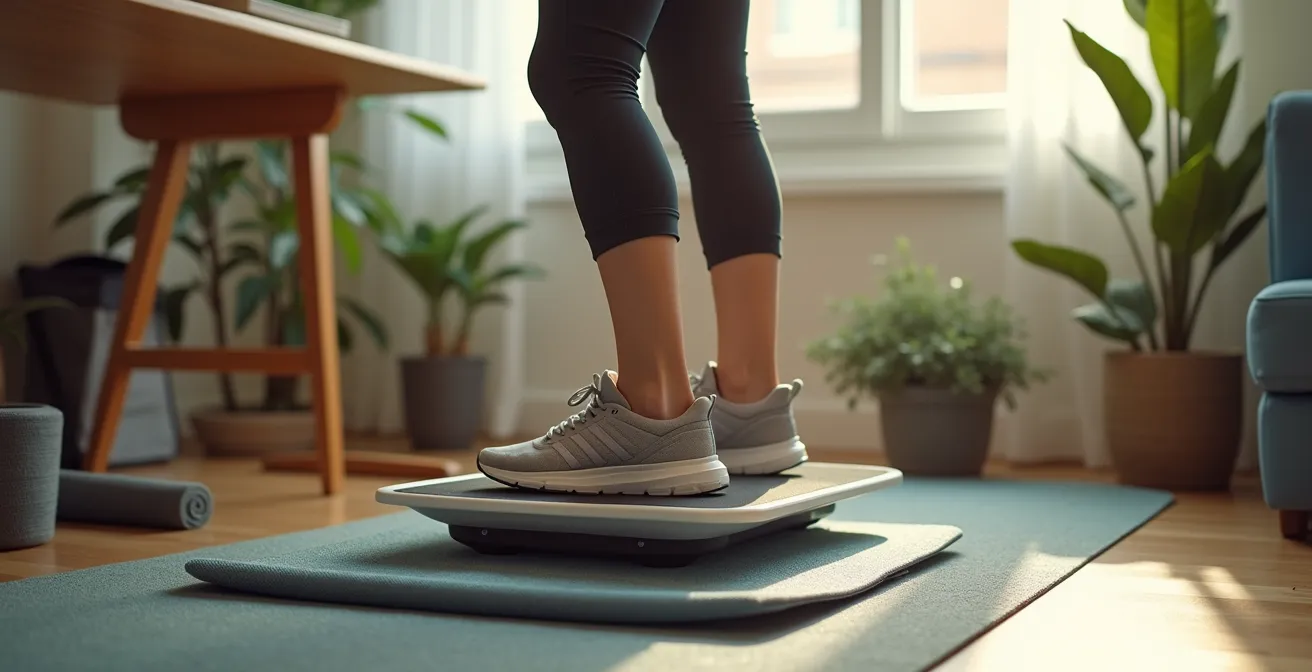
Integrating this portfolio into a demanding schedule relies on small, strategic habits. “Temptation bundling,” for example, involves pairing an activity you enjoy (like listening to a podcast) exclusively with an activity you want to build as a habit (like a daily walk). Transforming your commute by parking further away or taking calls while walking are other ways to weave movement into the fabric of your day without needing a dedicated “workout” block. The key is to start small with a Minimum Viable Play (MVP)—perhaps a single two-minute dance break—to build the neural pathway of consistency.
Here is a strategy to begin building your own portfolio:
- Build three activity options: A high-intensity/short option (e.g., 10-min HIIT), a social/long option (e.g., weekend team sport), and a solo/restorative option (e.g., evening yoga).
- Use temptation bundling: Only allow yourself to listen to your favorite podcast or audiobook during your daily walk or bike ride.
- Transform commute and call time: Always take the stairs, park at the furthest spot in the lot, and pace around your office during phone calls.
- Create a Minimum Viable Play (MVP): Start with something ridiculously small, like a 2-minute dance break between meetings, to build the habit of consistency.
- Schedule activities like meetings: Block time for movement in your calendar and treat it as a non-negotiable appointment with your most important stakeholder: yourself.
By embracing active pleasure and building a dynamic lifestyle, you are not just managing stress; you are fundamentally investing in your long-term capacity to perform, innovate, and lead. The next logical step is to move from understanding these concepts to implementing them. Start today by identifying one ‘play’ activity you can do for just 15 minutes this week.